Why Rice Prices Are Falling at the End of 2025 — And What’s Next
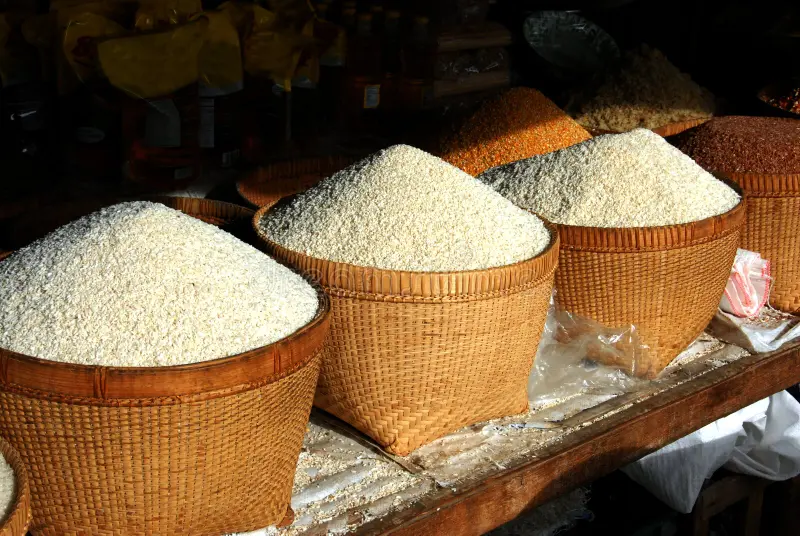
The global rice market is going through a significant shift in late 2025 — prices are moving downward, and that is already having ripple effects in Cambodia’s rice sector. Understanding why this is happening, and what to expect in 2025/26, is critical for farmers, exporters, and all stakeholders in the rice value chain.
Below we explain the key drivers behind the price decline, then move into a forecast and what Cambodian producers and traders should watch out for.
Why Are Rice Prices Going Down?
Here are the major reasons:
1. Rising global stocks and abundant supply
- According to Food and Agriculture Organization (FAO), for the 2025-26 marketing year, world rice stocks are forecast to rise by around 2.2 % to a new peak of approx. 215.4 million tonnes. Khmer Times+1
- Global analysts note that favourable weather in key rice-producing countries has led to larger harvests. ricenewstoday.com
- In Southeast Asia, for example, new crop arrivals (including Cambodia) are increasing available supply, which puts downward pressure on prices. https://akp.gov.kh
2. Intensified export competition and loosening of restrictions
- Some major exporters have either relaxed export restrictions or are increasing their exports — for example, India removing or softening export curbs, encouraging more supply into the global market. Financial Times+1
- With more exporting countries competing for the same pool of importers, competition drives offers down. The FAO commentary: “With little improvement in demand from key destinations” and “seasonal pressure in some Asian exporters” are putting downward pressure. https://akp.gov.kh
3. Weaker demand / delayed contracts
- Some traditional importing countries are delaying purchases or reducing volumes. For example, in Vietnam’s case it is noted that by mid-2025 many orders for their crop had been signed early so fewer new contracts in the year ahead. wtocenter.vn
- The global rice trade is projected to decline roughly 1.2 % to about 61.1 million tonnes. https://akp.gov.kh+1
4. Cambodia-specific: Seasonality + harvest timing + farmer planting decisions
- In Cambodia, as of March 2025, wholesale rice prices had already declined between October 2024 and January 2025 as the main harvest reached markets. ReliefWeb
- Also the United States Department of Agriculture (USDA) estimates for Cambodia’s 2025/26 production example show a slight drop in area and yield — this suggests farmers might switch away to more profitable crops if rice prices are weak. ipad.fas.usda.gov
5. Input costs, profitability and planting decisions
- When prices fall, farmers may choose less rice area or lower inputs, which can feed into longer-term supply changes. The USDA Cambodia report noted: “Current unfavorable prices could result in farmers opting to plant more profitable crops…” ipad.fas.usda.gov
What’s the Forecast for End of 2025 / Into 2026?
Here’s what the data and expert commentary suggest:
- Global rice prices are projected to drop by around 11 % in 2025/26 on favourable weather conditions and increased production. ricenewstoday.com
- In October 2025, the FAO noted rice prices fell about 2.5 % as the international benchmark rice markets were under pressure. https://akp.gov.kh
- Some analysts suggest that rice prices in 2025 may be lower than 2023-24 and possibly lower than 2022 or only slightly higher. wtocenter.vn
- For Cambodia specifically: the USDA projects production for the 2025/26 marketing year at about 8.10 million metric tons (milled basis), a drop of about 4 % from the 2024/25 estimate of 8.47 mmt. ipad.fas.usda.gov
What this means in practical terms for Cambodia:
- Reduced production alone does not guarantee higher prices because global supply/demand balance is still favouring oversupply.
- Exporters may face tighter margins, farmers may receive lower domestic prices unless they have premium/quality niches.
- Opportunities may shift: value-added rice (fragrant, organic), or diversification into other crops may become more attractive.
- Monitoring global trade flows (India, Vietnam, Thailand, China policy) will be key.
Key Takeaways for Farmers, Exporters & Stakeholders in Cambodia
- For farmers: Given falling price trends, focus on cost-control, yield efficiency, and/or quality premiums (fragrant rice, organic certification) will help maintain profitability.
- For exporters/processors: Evaluate market where competition is less price-sensitive (premium markets, new geographies) and consider diversification (processed rice, rice snacks).
- For policymakers: Supporting rice value-addition, export diversification, and encouraging planting decisions aligned with market signals will support the sector’s resilience.
- For investors/traders: Watch for early signs of demand recovery (e.g., a big buyer order), or supply disruption (weather, pests) which might cause price uptick. But current signals suggest a sluggish/range-bound price environment in the near term.
Conclusion
While rice remains a cornerstone crop for Cambodia, the global market context at the end of 2025 signals a downward price tilt rather than a sharp recovery. For Cambodian farmers and exporters, this means the old playbook of “produce more, sell bulk” may work less well. Instead, quality, diversification, efficiency and market-sensitivity will be the keywords going forward.
Foodbodia.com will continue to monitor these trends — share them with your network of farmers and buyers so your marketplace stays aligned with global realities.
Sources & References
- FAO / AMIS — “World Rice Prices Fall 2.5% in October” and stocks outlook. https://akp.gov.kh+1
- RiceNewsToday – “Global rice prices projected to drop 11% in 2025/26 on favourable weather”. ricenewstoday.com
- USDA Foreign Agricultural Service – “Cambodia Rice: MY 2024/25 Production Summary & MY 2025/26 Outlook”. ipad.fas.usda.gov
- ReliefWeb / GIEWS – Cambodia country brief on rice wholesale prices decline. ReliefWeb
- WTO Center / Vietnam trade commentary – rice export forecast difficulties and price outlook.
Leave a Reply